
|
LA RUDA has been described as a comic book and as a border myth. And while it does work off
Tijuana settings and music from traditional Mexican anthems to the Tijuana Brass, and invokes
imagery of Mexican films and comics, it could also be seen as a more universal mythos: like Blade or The Crow, but in the blue and silver of innocence instead of the red and black of evil.
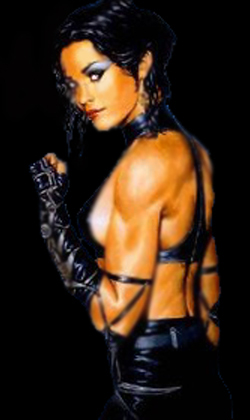
The RUDA is a twist on the Vampirella-type sex goddesses; the supernatural element is goodness instead of darkness. She is a free-standing heroine with no male figures around except villains: a solitary heroine in the grip of powers greater than herself, extreme sexual beauty emphasized by a stylized costume, and a very ready-to-rumble attitude when fighting evil. The appeal is hopefully as two-pronged as Vampirella or Xena: sexy for the guys, sexually independent and victorious over men for the girls. There is also a transformation of the heroine into a sort of semi-mechanical sculptured cyber-being; sleek and feminine, but also hard and powerful as a custom hotrod. Her imagery and costume draws from the hooded, caped Mexican wrestlers; bullfighting; "Low Rider" poster art, including pop/religious motifs; and barrio tattoos. Any Low Rider or male car freak would cream over her "transformed" appearance, a blend of state-of-the-art Kandy Apple Kustom and rocket science. The comic is vitalized by a lot of re-interpretations of Latino, Mexican, and athletic images and myths. Picture Catherine Zeta-Jones in Zorro, but in a radiant, sexy outfit, then watch her fight with perverts and demons, see her survive even death itself. She started out as a fighter, and now uses a lot of "Latino martial arts" such as cape and sword, banderillas, horns, bullwhip, two chromed police batons. She didn't choose her destiny, but she's very much a protector of abused children and the powerless. She's a cult. Her enemies are from both sides of the law, as are her allies and protégés. |
|
SETTING SYNOPSIS READ SCRIPT
|